
Parenting
Parenting From the Gulf: Staying Close to Kids You Only See on Video Calls
A gentle, practical guide for GCC-working parents on staying emotionally close to children in Kerala through ordinary contact, shared routines, and warm visits.
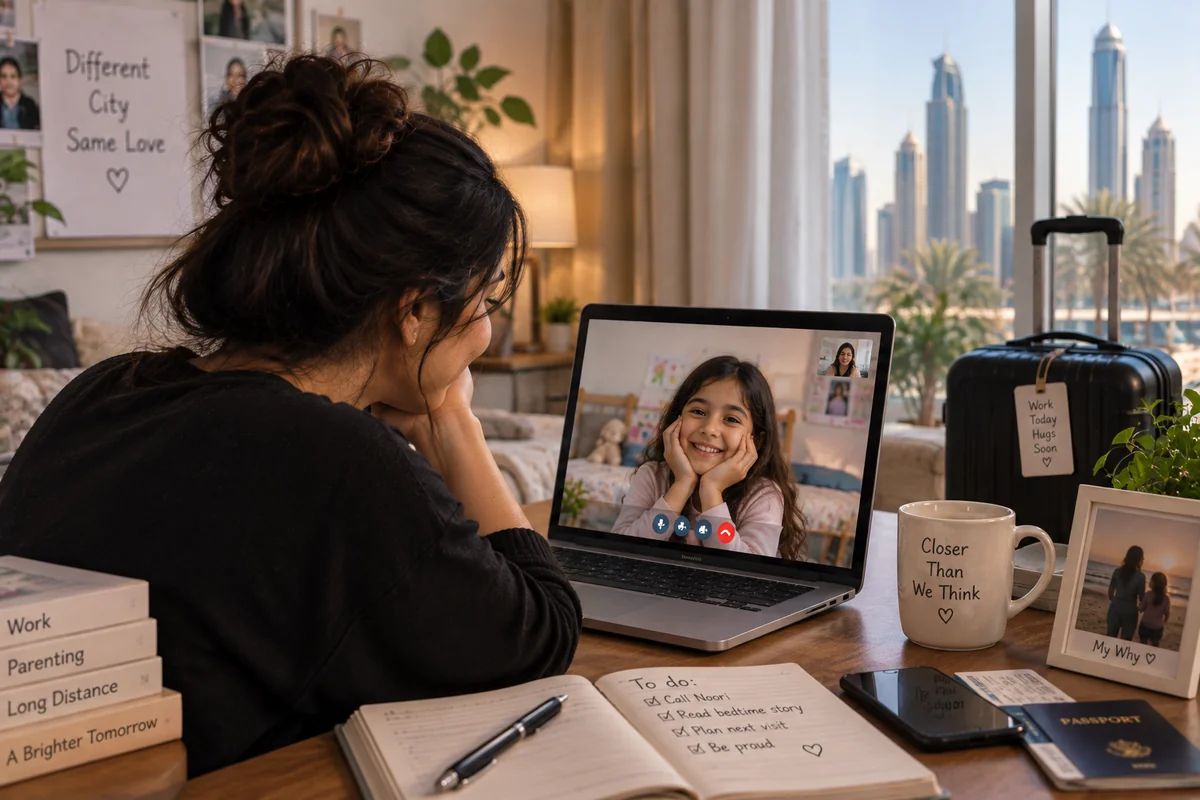
Yes, you can stay emotionally close to a child you mostly see on a screen. That closeness does not come from occasional visits or the gifts you carry home each year. It comes from ordinary, frequent contact and staying involved in the small details of your child’s daily life, even from thousands of kilometres away.
I have sat with many parents who work in the Gulf while their children grow up in Kerala, and the worry in the room is almost always the same. You send money, you call when you can, you count down the months to your leave. And still you wonder whether your child truly knows you. Let me walk with you through that worry, gently and honestly.
”Am I Turning Into a Visitor in My Own Child’s Life?”
This is the fear I hear most often. You arrive on annual leave, and your child is polite but a little shy with you. By the time they warm up, your ticket back is already booked. You feel like a guest, not a parent.
Please know that this feeling is common and it does not mean you have failed. Missing a first day of school, a fever, a small stage performance, these losses are real and it is right to grieve them. But a milestone missed in person is not the same as a child who feels unloved.
What the evidence points to is reassuring. Research reviewing children whose parents migrate for work finds their emotional wellbeing depends heavily on staying connected, not just on money sent home. The provision matters, but it is the connection that shapes how your child feels about you.
Why Frequent Ordinary Contact Beats the Rare Long Call
Many parents save their energy for one big weekly call and try to make it meaningful. But young children do not bond through long, formal conversations. They bond through repetition and presence in the small moments.
Here is a more sustainable rhythm to aim for:
- Choose short, regular touchpoints over rare marathon calls. A five minute check-in most days does more than an hour once a week.
- Anchor calls to real routines. Be the voice at bedtime, the face during a homework check-in, or the weekend ritual your child can rely on.
- Let the call be boring sometimes. Watching your child eat dinner or show you a drawing is the ordinary presence that builds closeness.
- Match your expectations to their age. A toddler may wander off mid-call, a school-age child may give one-word answers, a teenager may prefer texting. None of this is rejection.
If your child gives short replies or seems uninterested, remember this is normal even for co-resident parents. There are real reasons why your child will not tell you about their day, and distance is only one of them.
The Parent at Home Is Your Bridge
You are not doing this alone, and you should not try to. The parent or grandparents raising your child day to day hold the key to keeping you present in their world.
Studies on families split across borders show that the parent at home plays a central role in keeping the absent parent present in a child’s daily life. When they say “let us call Uppa and tell him,” or “Uppa would be so proud of this,” you stay woven into your child’s daily story.
So stay involved in the ordinary decisions. Ask to be part of choices about school, routines, and small worries, rather than only being told about big events after they happen. This shared involvement matters because research on fathers finds that involvement and closeness, not physical proximity alone, shape how connected a child feels to them.
The Guilt-Gift Trap
When you cannot be there, it is natural to want to compensate. So the suitcase gets heavier every trip. The chocolates, the phones, the branded clothes become a way of saying “I am sorry I am not here.”
There is nothing wrong with bringing something home. But gifts cannot carry the weight of your absence, and children can feel the difference between a present and your presence. Watch for the moment when giving becomes a way to quiet your own guilt rather than to delight your child.
That guilt is worth naming honestly. Many parents in your position carry the guilt of feeling you are never doing enough, and no amount of shopping will resolve it. What resolves it is the steady, unglamorous contact that shows up week after week.
Coming Home on Leave Without Getting It Wrong
The visit home carries so much hope and so much pressure. You want it to be perfect, and sometimes that very pressure makes reconnection harder.
A few things help the re-entry go gently:
- Lead with warmth before anything else. Spend the first days simply being close and present, not correcting behaviour or enforcing rules.
- Give your child time to warm up. A shy first day is not a verdict on your relationship. Presence over the days rebuilds the bond.
- Do not arrive as the strict visitor or the indulgent visitor. Both roles confuse a child. Stay aligned with the parent at home and follow the household’s existing rhythms.
- Talk with your partner before you land. Agree on how discipline and routines will work so your child sees two parents on the same side, not a soft one and a harsh one.
Remember that reconnection is a process across the visit, not a single perfect reunion at the airport.
When It Is Worth Reaching for Support
Some strain is normal in this life. But there are signs that deserve more than patience.
Consider speaking with a professional if your child shows lasting sadness, withdrawal, or behaviour changes that the parent at home cannot settle. Reach out too if the guilt and distance are wearing you down, if you feel numb on calls, or if you recognise in yourself why working parents so often feel emotionally exhausted.
Support can be for you, for your child, or for both of you together. Asking for help is not a sign that you are parenting badly across the distance. It is a sign that you take the relationship seriously enough to protect it.
You Are More Present Than You Fear
The distance is real and the ache of it is real. But the bond you are worried about is not built on the miles between you. It is built in the ordinary calls, the shared bedtime stories, the warm arrival home, and the quiet knowledge your child carries that you are thinking of them every single day. That, you can give from anywhere.
FAQ
Frequently Asked Questions
How can I stay close to my child while working in the Gulf?
Closeness comes from consistent, ordinary contact rather than occasional big gestures. Aim for short, frequent calls tied to real routines like bedtime stories or homework check-ins instead of rare marathon conversations. Staying involved in daily decisions with the parent at home matters far more than the size of any single visit or gift.
Why does my child seem distant on video calls?
Short attention spans, natural shyness, and the awkward format of a screen all make video calls feel stiff, and this is normal even for children who live with a parent. A quiet or one-word reply is not rejection. Presence over time, through regular ordinary contact, is what steadily rebuilds and strengthens the bond.
Should I bring gifts every time I visit home?
Bringing something home is perfectly fine, but gifts cannot replace your attention and time. Watch for the guilt-gift trap, where giving becomes a way to quiet your own guilt rather than to delight your child. Children can feel the difference between a present and your presence, so let the visit be about closeness first.
How do I handle discipline and reconnecting when I visit on leave?
Lead with warmth and reconnection first, spending the early days simply being close rather than correcting behaviour. Avoid arriving as either the strict or the indulgent visitor, since both confuse a child. Talk with the parent at home before you land and stay aligned with the household's existing routines so your child sees two parents on the same side.
Is it normal to feel like a visitor in my own child's life?
Yes, many Gulf-working parents feel this way, especially when a child is shy in the first days of a visit. This feeling does not mean you have failed as a parent. A missed milestone in person is not the same as a child who feels unloved, and steady connection over time keeps you truly present in their life.