
Parenting
Why Your Child Clings to You and What It Really Means
Your child follows you from room to room, melts down at every goodbye, and wants to be held constantly. Here is what clinging really means and when it is actually a sign of security.
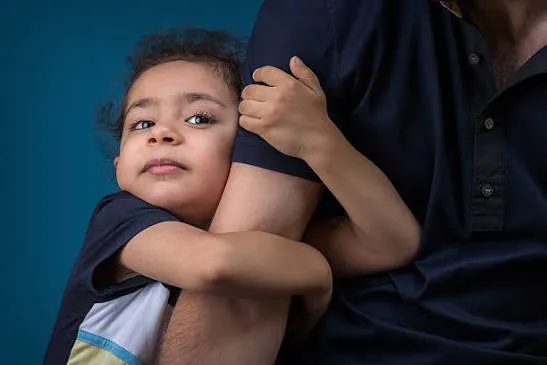
During my psychology training, I noticed something that stayed with me long after the lectures ended. Whenever the topic of childhood clinging came up, the room would shift. Parents would lean in, their voices would drop to a whisper, and the same question would surface, almost apologetically: “Is it my fault? Am I making them too attached?”
I remember sitting in a community mental health workshop where a mother described her toddler following her to the bathroom, fingers curled around the bottom of the door, and the room filled with knowing nods. No one laughed. No one dismissed it. But there was a collective ache in that room, a quiet worry that maybe this meant something was wrong.
That moment shaped how I think about clinging. Not as a clinical symptom to be managed, but as a form of communication that we, as adults, often misread. In my work building mental health communities at Crink, I see the same worry surface again and again. Parents write to us, sometimes at midnight, asking whether their child’s need for constant proximity is a sign that they have done something wrong.
I want to sit with that question here. Not to dismiss it, but to look at it closely, with tenderness and with evidence.
”Why does your child follow you like a shadow?”
If you have ever tried to walk to the kitchen without your child noticing, you know the particular silence that follows. The pause. The realization. And then the sound of small feet rushing to find you.
Clinging looks different at different ages, but the core experience is the same. Your child wants to be near you. Not just in the same room. Not just within earshot. Near you. Physically, tangibly close.
You might see it as:
- Following you from room to room, even to the bathroom
- Reaching up to be held the moment you set them down
- Crying when you hand them to someone they know and trust
- Grabbing your leg, your sleeve, your fingers, and not letting go
- Melting down at drop-off even after months of the same routine
- Waking at night and calling for you, even if they usually sleep through
It is exhausting. It is physically heavy. And it can feel suffocating, especially when you are already running on empty.
But here is what I want you to hold onto: clinging is not a behavior problem. It is not a sign that your child is “too attached” or that you have failed to foster independence. It is, in most cases, a deeply normal developmental process that tells you something important about your child’s growing understanding of the world and their relationship with you.
”Is this a problem, or is this love trying to find its footing?”
To understand clinging, we need to talk about what happens in a child’s mind between roughly 6 months and 3 years of age. This is the window where clinging most commonly appears, and there is a reason for that.
Before about 6 months, most infants do not have a strong sense of object permanence. They do not fully grasp that you continue to exist when you leave the room. Out of sight is, in a sense, out of mind. But somewhere between 6 and 9 months, something shifts. Your child begins to understand that you are a separate person who can leave, and that when you leave, you might not come back. Not because you will not, but because their brain cannot yet reliably predict your return.
This is a monumental cognitive leap. And it comes with a cost: fear.
Your child has learned to love you, to depend on you, to read your face and your voice for safety cues. And now, for the first time, they understand that you can disappear. Clinging is their way of saying, “I know you can leave now, and I do not want you to.”
Research on counseling families with two- to three-year-old children highlights that this period is one of the most emotionally complex for parents, because the child is simultaneously pushing for autonomy and pulling back for safety (PubMed). The toddler who says “I do it myself” is the same toddler who dissolves when you walk toward the door. Both impulses are real. Both are developmentally appropriate. And both can coexist within the same hour.
Clinging typically peaks around 12 to 18 months and then gradually eases as your child builds what psychologists call “internal working models,” which are mental representations of you that they can carry with you even when you are not physically present. They learn, through repeated experience, that you leave and you come back. That pattern, reinforced hundreds of times, becomes the foundation of their confidence.
But until that pattern is fully established, clinging is the bridge. It is how your child holds onto you mentally before they can hold onto you in memory.
”What if clinging is actually a sign you are doing something right?”
This is the part that surprises people the most.
In my conversations with parents through Crink’s community, I often hear clinging described as a failure. “I must have given in too much.” “I should have let them cry it out.” “Maybe I held them too much as a baby.”
But attachment research tells a different story.
A study on physiological regulation in young children during parent-child free play found that children with secure attachment relationships showed better physiological regulation when their parent was present (PubMed). In other words, the parent’s physical presence literally helped the child’s nervous system settle. The child was not being “dependent” in a negative sense. Their body was using the parent as a regulatory partner, which is exactly what a secure attachment is designed to do.
This is worth repeating: your child clings to you because your presence helps them feel safe at a biological level. Their heart rate steadies. Their breathing slows. Their stress hormones decrease. You are not a crutch. You are their co-regulator.
Children who have a secure base, a relationship where they feel consistently seen, soothed, and safe, are actually the ones who explore more confidently over time. They venture further because they know they have somewhere safe to return to. The clinging phase, difficult as it is, is often the proof that the foundation is being built.
The problem is not the clinging. The problem is the cultural narrative that tells parents their child should be independent by age two, sleeping through the night alone, separating without tears, and playing happily without needing adult proximity. That narrative is not grounded in developmental science. It is grounded in convenience, in adult schedules, and in a cultural discomfort with neediness.
Your child is not behind because they cling. They are doing the work of attachment, and you are their person.
”Am I making my child too dependent?”
This is the fear I hear most often, and I understand why.
There is a difference between responsiveness and what psychologists sometimes call “over-accommodation,” which is when adults restructure the entire environment to prevent any moment of distress. The distinction matters, but it is also easy to misread.
Responding to your crying child is not making them dependent. Holding them when they reach for you is not creating a problem. Picking them up when they are frightened is not spoiling them. These are acts of co-regulation, and they build the exact security that eventually allows children to separate with confidence.
What can sometimes prolong clinging unnecessarily is when adults, out of their own anxiety, send mixed signals. For example, lingering at the daycare door for twenty minutes, crying alongside the child, and then sneaking away when the child is finally distracted. That sequence confuses the child because it communicates two things at once: “Separation is dangerous” (through the lingering and the parent’s visible distress) and “I might disappear without warning” (through the sneaking away).
The goal is not to prevent your child from ever feeling distress at separation. The goal is to help them move through that distress with your support, so they learn that separation is survivable.
A scoping review of therapeutic and educational interventions for childhood separation anxiety found that the most effective approaches share common elements: predictable routines, clear communication about separations, gradual exposure, and parental consistency (PubMed). Not one of those elements requires you to be cold or distant. They require you to be warm and clear, which is a very different thing.
If you have ever wondered whether your child’s behavior is communicating something deeper than just wanting to be held, you might find this helpful: when your child won’t listen, what’s really going on. The same principle applies here. Behavior is language, and clinging is your child’s way of saying something they do not yet have words for.
”What quietly triggers more clinging?”
Clinging does not happen in a vacuum. It often intensifies during specific moments or transitions, and understanding those triggers can help you respond with more patience, both for your child and for yourself.
Developmental leaps. When your child is on the verge of a major cognitive or motor milestone, they often regress in other areas. A child learning to walk may suddenly want to be carried more. A child acquiring language may become more physically clingy. The brain is reallocating resources, and the secure base becomes even more important during these shifts.
Illness and physical discomfort. When children are teething, fighting a cold, or recovering from an illness, their threshold for separation drops dramatically. This is biologically adaptive. A vulnerable child seeks proximity to their protector. It is not regression. It is survival.
Life transitions. Moving houses, starting daycare, changing schools, a new caregiver, a new sibling. Any disruption to the familiar can trigger a clinging phase. This is especially relevant if you are also navigating new family dynamics. If you are dealing with sibling conflict during this transition, when siblings fight, what’s really going on offers additional context for how children process these changes.
Parental stress. Children are remarkably attuned to their caregivers’ emotional states. When you are stressed, grieving, or emotionally depleted, your child may sense that something is off and cling more tightly. They are not trying to make things harder. They are checking in the only way they know how.
Inconsistent separations. If sometimes you say goodbye and leave, and other times you sneak out, or if different caregivers handle drop-off differently, your child cannot build a reliable mental model of what happens when you leave. Unpredictability breeds anxiety, and anxiety breeds clinging.
Big emotions they cannot name. Sometimes clinging intensifies because your child is processing an emotion they do not have language for: jealousy, fear, sadness, even excitement. If your child has been having intense emotional reactions to seemingly small things, why your child gets so angry over small things explores how underlying emotions often surface in unexpected ways.
Understanding triggers does not mean you can always prevent them. Many triggers are unavoidable. But knowing what is underneath the clinging helps you respond with curiosity instead of frustration, and that shift alone can change the emotional temperature of the moment.
”How do you help without pushing them away?”
This is the question that matters most in practice. You want to support your child’s growing independence without making them feel abandoned. Here is what the evidence and clinical wisdom suggest.
Name the feeling before you fix the behavior. Before you try to peel your child off your leg, get down to their level and say something like, “You want Mommy to stay. You feel sad that I am going.” This does not make them cling harder. It makes them feel seen, and feeling seen is often the first step toward regulation. When children feel understood, their nervous system begins to settle, even before the separation happens.
Keep goodbyes short and confident. A long, apologetic, emotionally heavy goodbye communicates that the separation is something to be feared. A brief, warm, confident goodbye communicates that you trust this transition and that you will return. Try something like: “Mommy is going to work now. I will pick you up after snack time. I love you. Bye bye.” Then leave. Do not hover. Do not come back for one more hug. The exit itself is a message.
Use a consistent phrase or ritual. Children build security through predictability. A special handshake, a phrase you always say, a small object that belongs to you that they keep in their pocket. These rituals become mental anchors. Your child can return to the ritual throughout the day and feel connected to you even in your absence.
Practice separation in small, safe doses. Before a big transition like starting daycare, practice brief separations with a trusted caregiver. Leave for five minutes, then return. Then ten minutes. Then twenty. Each return reinforces the pattern: you leave, you come back. Over time, this pattern becomes something your child can hold internally.
Talk about the return before you talk about the leaving. Instead of saying, “I have to go now,” try saying, “After nap time, I will be right here to pick you up.” Frame the separation around the reunion, not the departure. This gives your child something to look forward to rather than something to dread.
Resist the urge to sneak away. I know it is tempting. When your child is finally distracted and content, slipping out feels like a kindness. But it breaks trust. Your child learns that you can disappear without warning, which makes them cling harder the next time because they cannot relax even when they seem settled. Always say goodbye, even when it is hard.
Accept that tears are not damage. Crying at separation is not a sign that something is wrong. It is a sign that your child loves you and finds your absence difficult. Both of those things are okay. You do not need to eliminate their tears. You need to help them move through them. A caregiver who can warmly receive those tears and support the child through them is doing exactly what is needed.
Take care of your own nervous system. If separations are emotionally charged for you, your child will pick up on that. This is not a criticism. It is an observation about how deeply connected you and your child are. If you need support, get it. Talk to a friend, a partner, or a professional. Your regulation is part of your child’s regulation.
The scoping review on separation anxiety interventions emphasized that consistency across caregivers and over time is one of the strongest predictors of improvement (PubMed). You do not need a perfect strategy. You need a consistent one.
”The goodbye trap: why sneaking away backfires”
I want to spend a moment on this one because it is the most common piece of advice parents receive, and also the most harmful.
“Well-meaning” friends, family members, and even some professionals will tell you to just wait until your child is distracted and slip out the back door. The logic seems sound: if they do not see you leave, they will not cry. Problem solved.
Except it is not solved. It is deferred, and it is made worse.
Here is what happens from your child’s perspective. They are playing happily. They look up. You are gone. There was no goodbye. No warning. No ritual. You simply vanished. For a child who is still building object permanence and separation tolerance, this feels like abandonment. Not because you intended it that way, but because their brain cannot yet differentiate between “left without saying goodbye” and “left forever.”
The next time you are together, your child will be hypervigilant. They will check on you more frequently. They will cling harder. They will be less willing to engage in play because they have learned that engagement leads to disappearance. You have accidentally reinforced the very behavior you were trying to avoid.
The research on family counseling for young children underscores that trust-building during this developmental period is foundational, and that disruptions to trust, even well-intentioned ones, can have lasting effects on separation patterns (PubMed).
Always say goodbye. Keep it short. Keep it warm. Keep it consistent. And trust that your child can handle the sadness of a goodbye better than they can handle the confusion of a disappearance.
”When should you ask for support?”
Most clinging is developmentally normal and resolves with time, consistency, and patience. But there are times when seeking professional support is the right call, and knowing those signs can help you act early rather than waiting in worry.
Consider reaching out to a child psychologist or pediatrician if:
- Your child’s clinging does not gradually ease after age 3 or 4
- Clinging is accompanied by severe distress that lasts long after you have left, not just a brief upset at goodbye
- Your child refuses to engage with any other caregiver, even familiar ones, for extended periods
- Separation distress interferes with eating, sleeping, or playing
- Your child develops physical symptoms like stomachaches or headaches in anticipation of separation
- The clinging follows a traumatic event, loss, or significant life change
- You feel emotionally depleted and unsure how to respond without escalating the situation
None of these signs mean you have failed. They mean your child may need a different kind of support, and that is what professionals are there for. Early support is not a verdict on your parenting. It is a resource, the same way you would see a doctor for a persistent cough.
The research on separation anxiety interventions makes clear that early, consistent support leads to better outcomes, and that parents play a central role in that process (PubMed). You are not handing over a problem. You are adding a team member.
A reflection before you go
If I could leave you with one thought, it is this: your child’s clinging is not a problem to be solved. It is a relationship to be understood.
The same child who wraps themselves around your leg today will, one day, walk into a classroom without looking back. They will go to a friend’s house, a summer camp, a college dorm. They will separate, not because you forced them to, but because you gave them enough security to believe that the world is safe enough to explore.
That belief starts here. In the exhausting, repetitive, sometimes overwhelming work of being their person. Of saying goodbye and coming back. Of holding them when they reach for you and letting them go when they are ready.
You are not making them too dependent. You are making them secure. And security is the foundation of every independence that follows.
FAQ
Frequently Asked Questions
Is it normal for my child to be clingy?
Yes. Clinginess is a normal part of child development, especially between 6 months and 3 years. It reflects your child growing awareness of separation and their need for a secure base. Research on attachment shows that clinging behavior often indicates a strong parent-child bond rather than a problem.
When should I be concerned about my child's clinginess?
If clinginess persists beyond the typical developmental window, significantly interferes with daily activities like school or playdates, or is accompanied by intense distress at separation, it may be worth discussing with a child psychologist or pediatrician.
How should I respond when my child clings to me?
Acknowledge your child's feelings without dismissing them. Offer brief, confident goodbyes rather than prolonged ones. Research on separation anxiety interventions suggests that consistent, warm routines help children build tolerance for separation over time.