
Work
Panic Attack or Anxiety Attack? A Working Professional's Guide to Knowing the Difference
Learn the clinical difference between panic attacks and anxiety attacks. Understand symptoms, triggers, and when to seek help as a working professional.
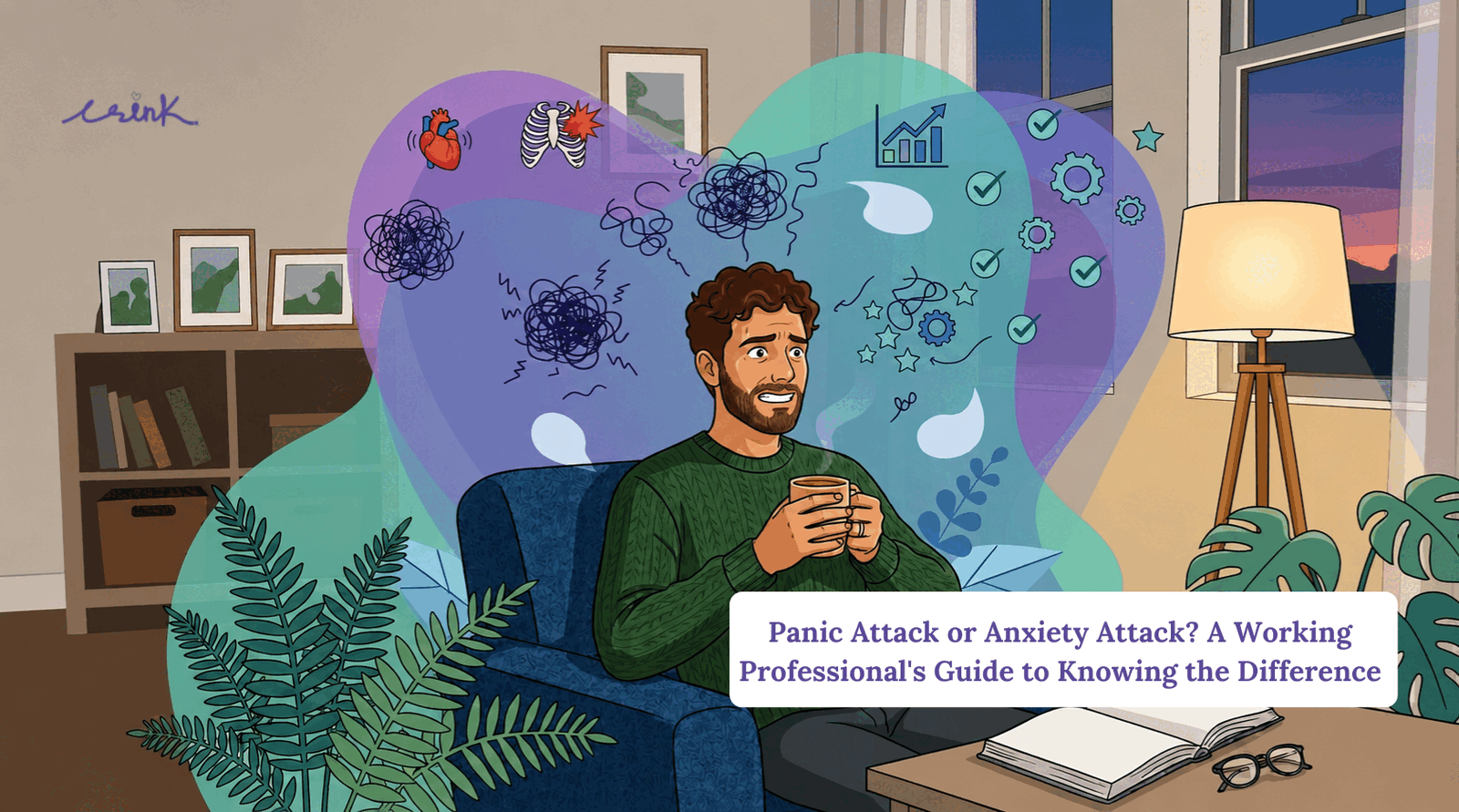
Panic attacks and anxiety attacks are clinically distinct experiences that working professionals often conflate.
You have probably felt something shift in the middle of a presentation, on the commute home, or late at night when everything should have calmed down by now.
Your chest tightens. Your thoughts speed up or go blank. You replay it later and wonder: was that stress, anxiety, or something more acute?
The difference matters because each pattern tends to respond to different kinds of support.
Naming what you are experiencing is the first act of taking it seriously.
Why These Terms Get Confused
Most people Google “panic attack” or “anxiety attack,” use the terms interchangeably, find a listicle that says to breathe deeply, and move on.
That confusion makes sense. High-functioning professionals are especially good at reframing distress as tiredness, a rough week, or something they should be able to push through.
But the two are not the same, and getting precise can help you choose the right support instead of assuming you just need to work harder through it.
What People Usually Mean by an Anxiety Attack
Here is the honest clinical truth: “anxiety attack” is not a formal diagnostic term in the DSM-5.
What most people call an anxiety attack is better understood as an intense escalation of anxiety. It tends to build gradually and often overlaps with the kinds of symptoms described in generalized anxiety disorder.
Common Signs of Escalating Anxiety
- Persistent worry that feels hard to switch off.
- Muscle tension, especially in the neck, jaw, or shoulders.
- Difficulty concentrating.
- Irritability that feels bigger than the trigger.
- A low-grade sense of dread that you cannot fully explain.
- Physical fatigue that sleep does not completely fix.
For working parents, anxiety often does not announce itself dramatically. It becomes ambient and chronic, the same kind of strain that can sit underneath emotional exhaustion in parenting or other high-functioning stress patterns.
What a Panic Attack Looks Like
A panic attack is different in a very specific way: it is sudden, intense, peaks within minutes, and feels acutely physical.
The symptoms described by NIMH’s panic disorder guidance include the signs many people mistake for a medical emergency.
Common Signs of a Panic Attack
- Racing or pounding heart.
- Sweating, shaking, or shortness of breath.
- Chest pain or tightness.
- Dizziness, nausea, or feeling faint.
- Numbness, tingling, or chills.
- Fear of losing control, fear of dying, or feeling detached from yourself.
That is part of what makes panic so frightening. Many people experiencing their first panic attack genuinely believe something is physically wrong in a dangerous way.
Why Working Professionals Are Especially Vulnerable
Mid-to-senior level professionals, especially those also managing a household and children, carry what researchers call allostatic load, the cumulative wear that comes from chronic stress exposure.
Your nervous system does not separate “important deadline” stress from “my child is sick and I still have three meetings.” It accumulates it.
That is why panic and anxiety can also sit beside other hidden struggles, including the patterns described in The 4 Stages of Depression in Working Professionals.
There is also an identity layer here. If you are used to being calm, capable, and in control, symptoms like these can feel not just uncomfortable, but incompatible with who you are supposed to be.
What You Can Do Next
The distinction matters because using the wrong framework often means using the wrong tools.
- Stop normalizing what is not normal: Occasional stress is normal. Chest tightness before every Monday morning is not.
- Track the pattern: Notice whether it builds gradually or arrives suddenly, whether it has a clear trigger, and whether it feels more mental or more physical.
- Do not wait for a crisis: Early support is usually easier than waiting until avoidance, burnout, or fear hardens into a pattern.
- Get context-specific help: Generic advice does not always land. It helps to talk to someone who understands workplace pressure, performance, and the emotional load behind both.
Take the free Stress Assessment
Why Precision Helps
Anxiety that builds gradually often responds well to structured approaches like sleep support, boundaries, mindfulness, and therapy aimed at chronic stress.
Recurrent panic attacks often need a more targeted clinical approach that understands the panic cycle itself.
If you are trying to make sense of what is happening, you do not have to do it alone. Even support like mental health coaching can help you notice patterns earlier and take them seriously.
FAQ
Frequently asked questions
Can you have both panic attacks and anxiety at the same time?
Yes. Many people experience chronic anxiety (the gradual build-up) punctuated by acute panic attacks. You might feel generalized worry all week and then have a sudden panic episode during a presentation. Panic disorder—recurrent panic attacks—often develops in the context of chronic anxiety.
Is a panic attack dangerous? Will I have a heart attack?
Panic attacks feel dangerous because the physical symptoms—chest tightness, racing heart, breathlessness—mimic cardiac events. But a panic attack itself is not medically dangerous. However, the fear of panic can trigger the next one, creating a cycle. If you're unsure whether chest pain is cardiac or panic-related, it's always worth getting medical clearance from a doctor.
Why do high-performers get panic attacks and anxiety more often?
High-achievers carry what researchers call "allostatic load"—cumulative stress from managing multiple high-stakes domains (work, parenting, identity). Their excellent coping skills actually mask symptoms longer, so they don't seek help until the nervous system finds a way out: either chronic anxiety or sudden panic. The very traits that make you successful can delay recognition of distress.
Can I treat panic attacks and anxiety on my own?
Some anxiety management (sleep, exercise, boundary-setting) helps. But recurrent panic attacks and clinical anxiety typically need professional intervention—either therapy or medication—to break the cycle. For working professionals especially, early intervention produces better outcomes than waiting until symptoms escalate. Self-help is useful as a complement, not a replacement.
How long do panic attacks last?
Panic attacks typically peak within 10 minutes and subside within 20-30 minutes. However, the fear and exhaustion afterward can linger for hours or days. Anxiety, by contrast, is low-grade and persistent—it can last hours, days, or weeks. The duration difference is part of what makes them clinically distinct.
What should I do if I think I'm having a panic attack?
In the moment: breathe slowly, remind yourself it will pass (panic peaks within 10 minutes), and avoid avoidance behaviors (don't leave the meeting or situation if possible—that reinforces the panic cycle). Longer term: get professional support early. Track patterns to confirm it's panic vs. anxiety. Work with a therapist who understands your professional context. Don't wait for it to escalate.
Updated on May 20, 2026