
Parenting
Should Hugs Be a Reward? What Parents Should Know About Conditional Affection
Can love become a reward in parenting? What research on conditional affection shows, why hugs work better as connection than as a prize, and five things to try at home.
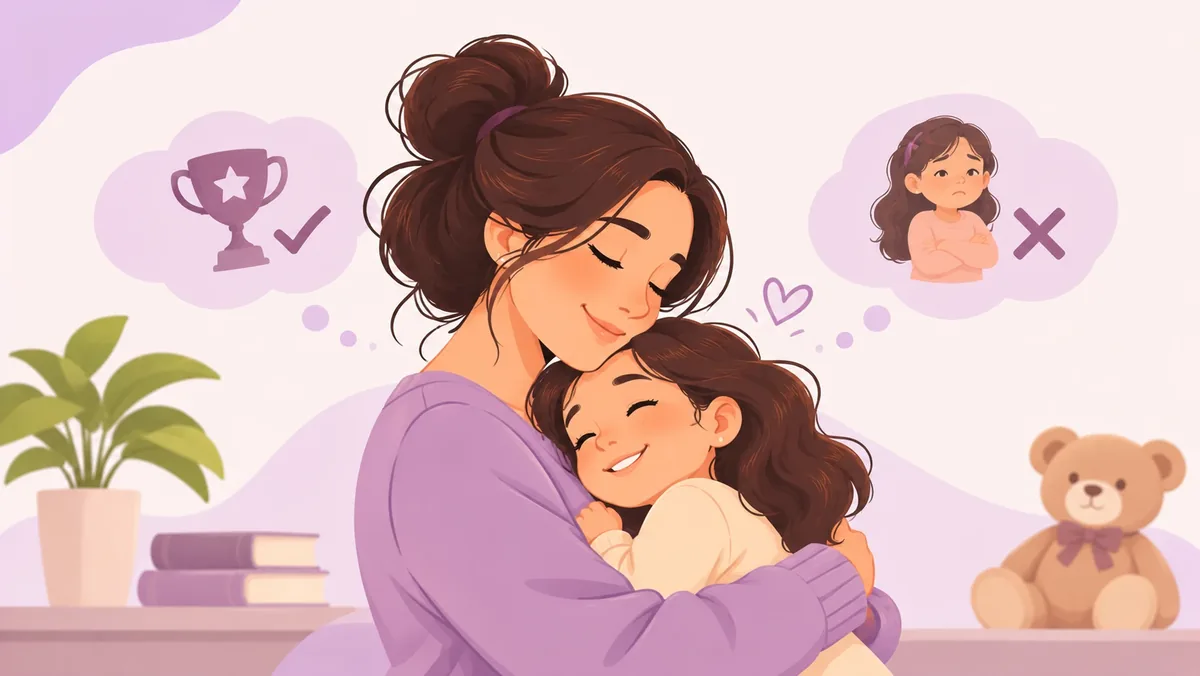
Using hugs as a reward for good behaviour is best avoided. When affection depends on behaviour, children can come to feel they must earn love, and research on what psychologists call parental conditional regard links this pattern to resentment and fragile self-worth. Hugs work better as connection: given freely, before you guide your child, not as a prize afterwards.
A small parenting moment
Today I want to share a moment that made me think about how we encourage children to follow instructions.
A parent once told me about something she had tried. She is a passionate, loving mother who keeps exploring different ways to guide and discipline her children. Like many parents, she wants them to build good habits and learn to listen.
While watching her son, she noticed something beautiful. He loves hugging her, and he lights up when she shows him affection.
She saw an opportunity in this, and began saying: “If you follow this, I will give you a hug.”
For her, it was a simple way to motivate her child with something he genuinely loves. Her intention was never to withhold love. She wanted to encourage positive behaviour.
But it got me thinking.
Is affection a reward we should offer?
At first glance, a hug for good behaviour seems harmless, even sweet. Children respond to different motivators. Some love praise, some love playtime, and some value physical affection above everything.
But there is another side to consider. When a hug comes only after a child follows instructions, could the child begin to link affection with good behaviour? Could they slowly come to feel that they need to do something right to be loved?
There is a real difference between an occasional playful incentive and a pattern where affection has to be earned. That difference is worth exploring.
What does psychology say about conditional affection?
Psychologists have a name for this pattern: parental conditional regard. It describes a relationship where a parent’s warmth rises when a child meets expectations and cools when they don’t.
Researchers Avi Assor, Guy Roth, and Edward Deci have studied it closely. In a study across three generations published in the Journal of Personality, they found that conditional regard can work in the short term, because children often do what is asked. But it was also linked to resentment towards parents, self-esteem that rose and fell with performance, and a sense of inner pressure rather than genuine choice. The pattern even tended to pass from one generation to the next.
What surprises many parents is that this applies to positive conditional regard too, meaning extra warmth for good behaviour and not just warmth withdrawn after bad behaviour. A later study of adolescents in Developmental Psychology found that even conditional positive regard had emotional costs compared with parenting that supports a child’s own sense of choice.
Attachment research points the same way. Children cooperate best when they feel secure in the relationship. When love feels steady and guaranteed, a child has the emotional safety to listen, learn, and even make mistakes.
Love works best as the foundation of discipline, not as a tool within it.
How can hugs build connection instead of being a reward?
Here is the hopeful part. This mother’s instinct was right: her son’s love of hugs is powerful. It simply works better as a bridge than as a prize.
Many parents find that connecting before directing makes cooperation easier. A hug, a moment of eye contact, or a warm word before a request helps a child feel safe and seen, and a child who feels connected is far more willing to listen. If listening is a daily struggle, when your child won’t listen looks at what may be going on underneath.
| Instead of… | Try… |
|---|---|
| ”If you follow this, I will give you a hug." | "Come here, I need a hug! Okay, now let’s get your shoes on together." |
| "Do this and then you’ll get a hug." | "I love hugging you. Now, let’s talk about what we need to do." |
| "Good boy, here’s your hug." | "Thank you for listening to me. I really appreciate your effort.” |
The affection comes first, freely. The guidance follows from a place of closeness.
What can you try at home?
- Give affection for no reason. Offer hugs at random, ordinary moments, so your child learns that love is always available.
- Connect before you correct. Get down to your child’s level and make eye contact, or offer a gentle touch, before giving an instruction.
- Praise effort, not just obedience. “You worked hard to tidy up” builds lasting motivation better than “Good boy for listening.”
- Keep rewards separate from love. If you use rewards, choose small things like a sticker or picking the bedtime story, never affection.
- Stay warm in tough moments. You can hold a firm boundary and still say, “I love you, and the answer is still no.”
Of course, context matters. A single sentence doesn’t define a parent’s approach, and no parent gets it right every time. Awareness, not perfection, is the goal. For more on how warmth and firm limits fit together, see does gentle parenting actually work? and is punishing kids to make them better right or wrong?
A question for you
This story is not about labelling a parenting approach as right or wrong. It is about noticing the small ways our words shape a child’s understanding of love, behaviour, and relationships.
The parent in this story was doing something positive. She watched her child, understood what he enjoyed, and looked for a way to encourage him. The real question is how we build on that beautiful intention in a way that supports both healthy behaviour and emotional security.
So, take a moment to reflect: Have you ever used affection as a reward, or noticed it in your own childhood? How did it feel?
Let’s make parenting a space for curiosity, reflection, and learning, not judgment. And if you would like support thinking through your own approach, Crink’s psychologists and parent mentors are here to help.
FAQ
Frequently Asked Questions
Is it okay to use hugs as a reward for good behaviour?
An occasional playful moment is unlikely to cause harm, but using affection as a regular reward for good behaviour is best avoided. When warmth depends on behaviour, children can start to feel they must earn love. Hugs work better given freely, as a way to connect before you guide your child, rather than as a prize for doing what they were told.
What is parental conditional regard?
Parental conditional regard is a parenting pattern in which a parent's warmth and affection rise when a child meets expectations and cool when they don't. Research by Avi Assor, Guy Roth, and Edward Deci found it can increase compliance, but it is linked to resentment towards parents, self-esteem that rises and falls with performance, and a sense of inner pressure.
What can I use as a reward instead of affection?
If you use rewards, keep them small and separate from love: a sticker, choosing the bedtime story, or a few extra minutes of play. Praise effort specifically, such as 'You worked hard to tidy up', rather than general obedience. Keep hugs and warmth available to your child no matter how the day has gone.
How do I get my child to listen without rewards or punishment?
Connect before you direct. Get down to your child's level, make eye contact or offer a gentle touch, and then give the instruction. A child who feels connected and secure is much more willing to cooperate. You can still hold firm limits warmly: 'I love you, and the answer is still no.'