
Self
The Unsaid Power of Journaling: A Simple Way to Ease Stress
Discover journaling benefits—clear your mind, reduce stress, gratitude practice. Psychology-backed tips & real client story to ease anxiety daily with Crink.
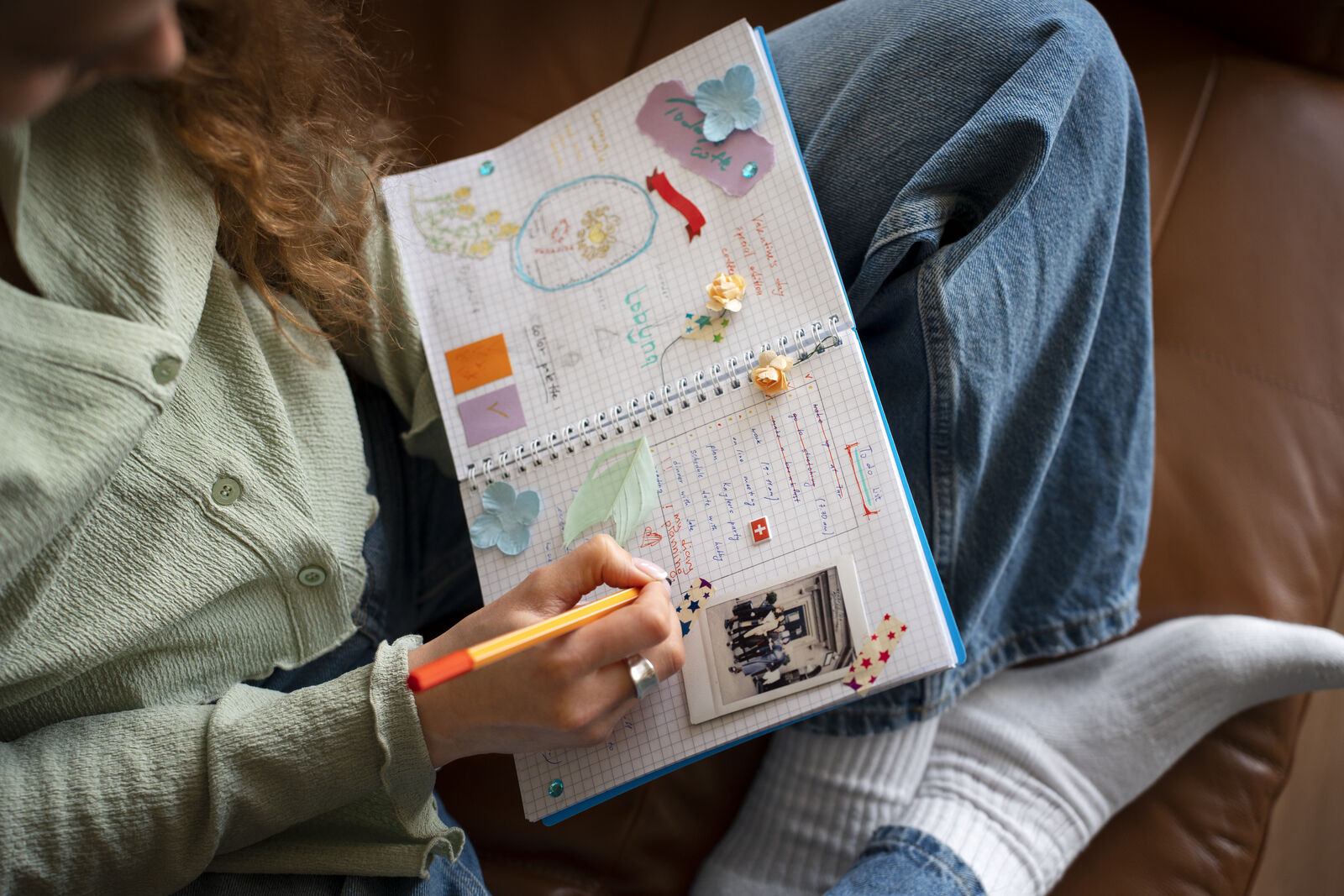
Have you ever felt like your mind is too full, with thoughts you can’t sort out?
Or like emotions pile up inside, but you don’t know how to let them out?
Stress builds up, making it hard to focus or even relax.
But what if there were a simple way to clear your mind and feel lighter?
A Small Notebook, A Big Relief
The power of a small book is often unsaid.
Journaling is more than just writing; it’s a way to clear your mind.
Putting your thoughts on paper helps you understand your feelings, notice patterns, and make sense of things that feel overwhelming.
Journaling isn’t about writing well or finding the perfect words. It’s about giving your thoughts a place to go, so they don’t stay stuck in your head.
It can help reduce anxiety, make it easier to handle stress, and allow you to accept your emotions instead of fighting them.
You don’t need to write a lot, just a few lines each day can make a difference.
Over time, journaling becomes more than a habit. It becomes a safe space, a way to heal, and a simple tool to help you feel lighter.
It can even sit alongside the bigger work of rebuilding work-life balance when your mind already feels overcrowded.
Why Writing Helps Reduce Stress
Have you ever noticed that when you talk to someone about your worries, you feel a little better?
Journaling works the same way.
Research shows that writing down your thoughts helps lower stress, ease anxiety, and improve your mood.
There are even studies that show how helpful journaling is for the mind.
Studies suggest that writing about things you are grateful for can help reduce feelings of sadness and frustration.
Research suggests that writing about gratitude can ease symptoms of depression, and expressing emotions on paper can help you feel more in control.
Journaling also helps with emotional release. Think of stress like a backpack filled with heavy books.
Carrying it all day gets exhausting. But when you take one book out at a time, the load gets lighter.
Writing works the same way, it helps you unload your thoughts, making it easier to breathe and think clearly. It can be a useful companion when you are trying to understand whether what you are feeling is anxiety, panic, or everyday overwhelm.
A Sweet Personal Experience of Journaling
During one of my sessions, I noticed a client who was deeply overwhelmed.
Her past experiences, current environment, and ongoing stress had made her see life only through a negative lens.
It felt like everything around her was heavy, and she couldn’t remember the last time she truly felt light or hopeful.
I suggested trying something called positive journaling, that is, writing down at least three things each day that made her feel grateful, calm, or even just okay.
To my surprise, by the very next session, she told me she already felt a shift.
“I thought I would struggle to find even three things,” she said, “but once I started writing, I ended up listing five… sometimes even ten.”
“I wake up feeling lighter,” she shared. “It’s like I’m finally seeing the good that’s been there all along.”
A Simple Way to Start
So, as said before, you don’t need to write pages or have perfect words.
- Start with a sentence.
- Ask yourself what’s on your mind today.
- Ask what’s stressing you out.
- Notice what made you smile.
It doesn’t have to be deep or meaningful. It just must be honest.
Over time, journaling can become your personal space to let go of stress and find some clarity.
Take the free Stress Assessment
So, grab a notebook, take a deep breath, and start writing.
You might be surprised at how much better you feel.
FAQ
Frequently asked questions
What is the core message of "The Unsaid Power of Journaling: A Simple Way to Ease Stress"?
Discover journaling benefits—clear your mind, reduce stress, gratitude practice. The post explains the issue in concrete, recognizable terms so readers can tell the difference between a difficult phase and something that deserves real attention.
Why does this issue matter according to the article?
According to the article, this matters because early recognition, informed support, and compassionate responses can change outcomes for the person affected and the people around them.
What practical takeaway does the article leave readers with?
The practical takeaway is to learn the signs, take symptoms seriously, and reach for timely professional or practical support rather than waiting for fear, exhaustion, or shame to deepen.
Updated on April 22, 2026